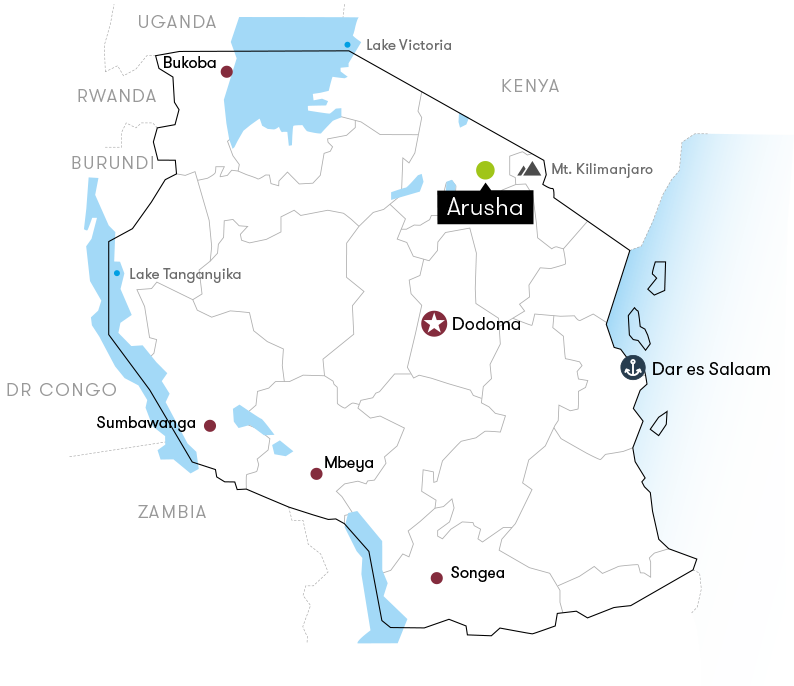
This natural lot is from Kilimanjaro Estate on the southern slopes of Mount Kilimanjaro. The estate has a total area of 663ha, making it one of the largest in northern Tanzania. Of these, 565ha are planted with coffee, while the remaining 98ha are kept as preserved natural forest.
Social and Sustainability
Through its Community and Economic Development branch, Kilimajaro Plantations Ltd. (KPL) allocates at least $17,000 annually to projects, divided into three main areas: the CSR Fund ($8,500) for environmental and social needs, the Education Fund ($6000) for sponsoring local youth in vocational, diploma, and degree programs, and the Development Fund ($2,500) for Rural Community Societies to support their communities.
The estate has planted more than 10,000 indiginous shade trees across the plantation to protect the soil and coffee plants from the East African sun. They are also instrumental in helping stablize the micro-climate and fight against deforestation in the region. The entire farm is equipped with a drip-line irrigation system which provides constant water and nutrient uptake for every single coffee tree throughout the year. This drip-line irrigation reduces water consumption by 60%.
History of Coffee in Tanzania
Like other coffee-growing regions in East Africa, it seems likely that coffee may have been known as a garden crop grown for barter and consumption (chewing rather than brewing) as early as the 16th century. German occupiers introduced commercial cultivation of at the end of the 19th century, and coffee became an exported cash crop. Following WWI, the British took control of the region and the estate model was firmly established for coffee. During the transition years from British “protection” to independence, the coffee farming cooperative began to emerge and would eventually dominate coffee production after formal independence in 1961. Today, 95% of coffee farmers are smallholders, growing coffee on less than 5 acres of land.