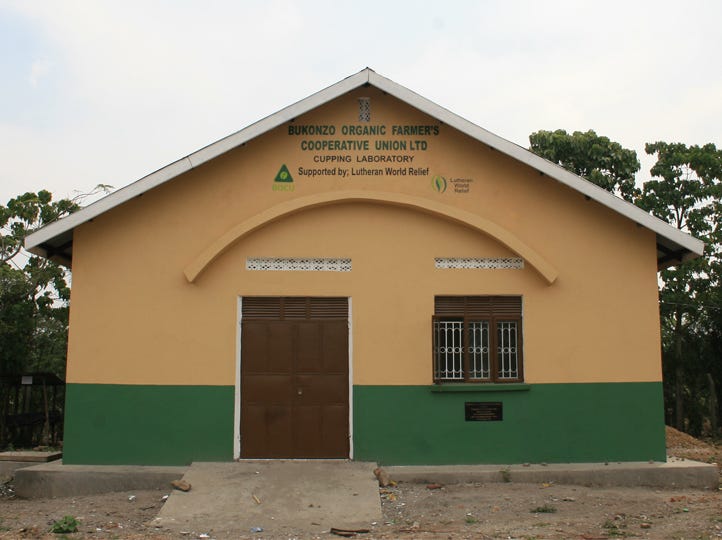
Bukonzo Organic Farmers Co-operative Union was started in 2009 to try and increase the prices gained by farmers for their coffee production. This region of SW Uganda has historically been made up of home-processed and natural coffees of lower commercial qualities. Recognising the excellent growing conditions for arabica production, Bukonzo invested in 36 local micro washing stations designed to process high quality fully washed coffees, as well as securing organic certification for their farmers. This approach has allowed an increase in premiums reaching the farmers in what is one of the most impoverished parts of the country, creating a sustainable industry for which they can provide for their families. Bukonzo also place a large emphasis on environmental sustainability, using organic fertilisers from local livestock and intercropping with bananas, beans, fruit trees, cocoyams, vanilla, passionfruit, and mango trees.
The Region
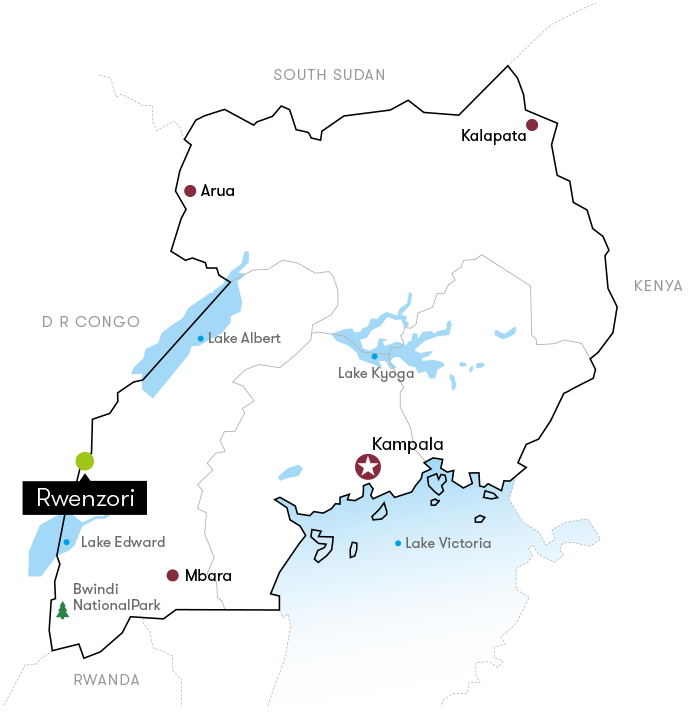
Situated at the feet of the Rwenzori mountains just north of Lake George, the region around Kasese has excellent conditions for speciality Arabica production with some of the highest altitudes in Uganda, fertile soil and plentiful rainfall. However, widespread poverty and a lack of infrastructure, as well as the political upheaval in Uganda over the past 40 years has meant this region has struggled to realise its full potential for speciality arabica production. Organisations such as Bukonzo Co-Operative are leading the way in realising this potential and returning it to its status as a respected speciality arabica producing region in Uganda.
The Process
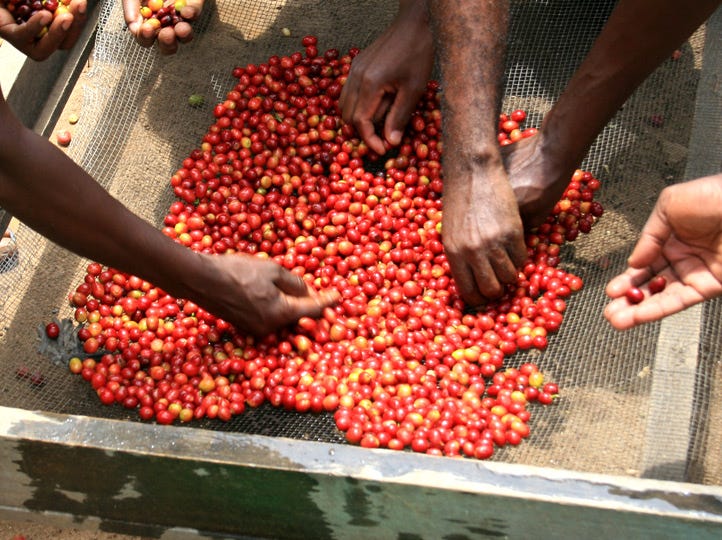
Red ripe cherries are carefully selected and delivered to the washing station on the day of harvest then placed in a flotation tank to separate by density. The cherries which sink to the bottom (the highest quality) are separated for processing. After removing the outer pulp the coffee is fermented without water for around 24 hours, depending on climatic conditions. The coffee parchment is then washed in clean water channels. The wet parchment is dried in the sun on raised beds for 3 days, followed by shade drying until the coffee has reached a moisture content of 12%. They must be frequently turned to ensure consistent drying. The dried parchment is then devliered to the co-op’s central drymill and rested before being hulled, graded by bean size and bagged in Grainpro for export.